
How Lawn Aeration Works
The Benefits & Science of Lawn Aeration
Your lawn is struggling—not because of what you're doing, but because of what's happening beneath the surface.
If you've been fertilizing, watering, and mowing regularly but still seeing thin, patchy grass, the problem is likely compacted soil. When soil becomes compacted, it creates a hard barrier that prevents water, oxygen, and nutrients from reaching your grass roots.
That's where professional core aeration comes in—and we're here to explain exactly how it works, why it matters, and how to get started.
WHAT IS LAWN AERATION?
The Problem: Compacted Soil
Over time, your lawn's soil becomes compacted from:
Foot traffic from kids, pets, and daily use
Mowing equipment compressing the ground with repeated passes
South Carolina's heavy clay soil that naturally packs down
Rainfall and irrigation settling soil particles tighter
New construction where heavy equipment has compressed subsoil
When soil is compacted, it essentially suffocates your grass. Water runs off the surface instead of soaking in. Fertilizer sits on top instead of reaching roots. And your grass can't develop the deep root system it needs to survive South Carolina's hot, dry summers.
The Solution: Core Aeration
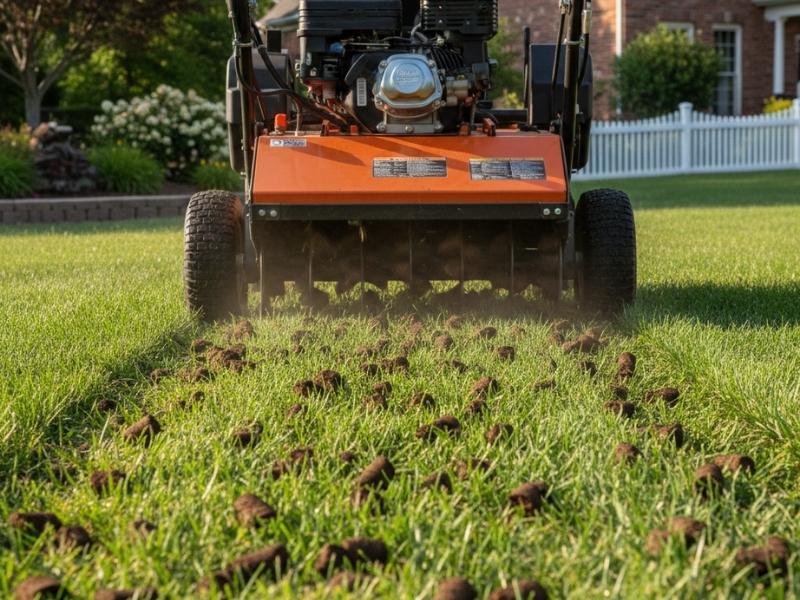
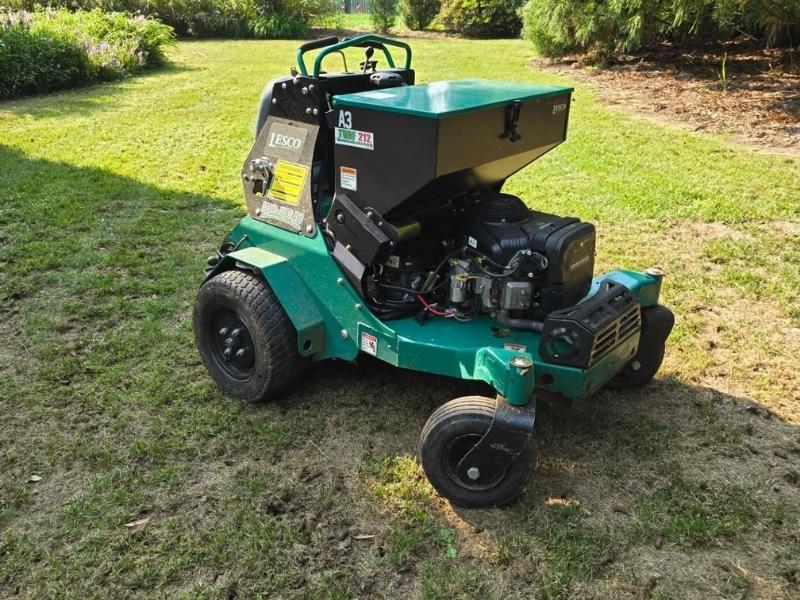
Core aeration is the process of mechanically removing small plugs of soil (2-4 inches deep) from your lawn using a specialized machine. These plugs are typically spaced 2-6 inches apart across your entire lawn.
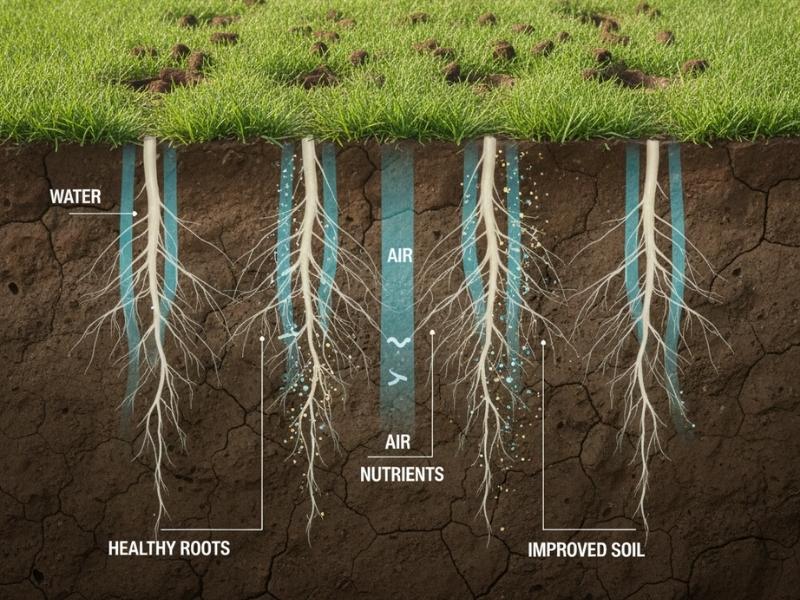
This creates thousands of tiny channels that allow:
Oxygen to reach the root zone
Water to penetrate deep into the soil
Nutrients to get absorbed by grass roots
Grass roots to expand and grow deeper
The soil plugs that are removed are left on the surface of your lawn, where they naturally break down within 1-2 weeks, returning valuable nutrients to the soil.
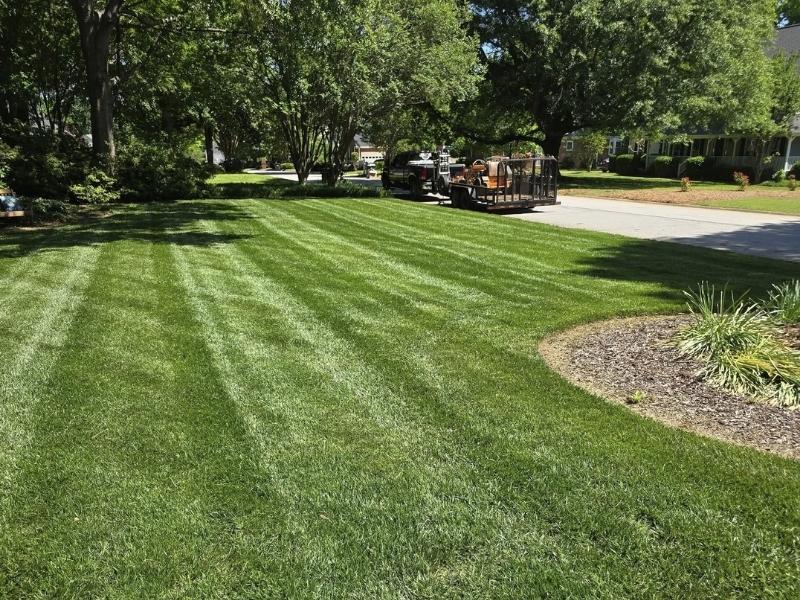
The result? Your lawn can finally absorb the water and fertilizer you're already applying—leading to thicker, greener, healthier grass.
Signs Your Lawn Needs Aeration
Not sure if your lawn needs aeration?
Look for these signs:
Water puddles or runs off instead of soaking in
Grass is thin or patchy despite regular care
Soil feels hard when you walk on it
Grass struggles in summer even with watering
Thatch buildup (spongy layer between grass and soil)
Your lawn was installed during new construction within the last 5-10 years
Bare spots that won't fill in on their own
Weeds are thriving while grass struggles
Warm Season Grasses VS. Cool Season Grasses
Determining Your Grass Type
One of the most important factors in lawn care is knowing what type of grass you have. In Simpsonville, we see both warm-season and cool-season grasses, and they have very different needs.
Not sure what type of grass you have? No problem—we can help you identify it when you request a free quote.
Warm Season Grasses
Common Types: Bermuda, Zoysia, Centipede, St. Augustine
Growing Season: Late spring through summer (thrives in heat)
Dormancy: Goes brown/tan in winter when temperatures drop
Best Aeration Timing: Late spring to early summer (late March through August) when the grass is actively growing and can recover quickly
Why This Timing Matters: Aerating during the active growing season allows warm-season grasses to quickly fill in the aeration holes and take advantage of improved soil conditions during their peak performance period.
Cool Season Grasses
Common Types: Tall Fescue, Bluegrass, Perennial Ryegrass
Growing Season: Spring and fall (prefers cooler temperatures)
Dormancy: Can go dormant or thin out during hot summer months
Best Aeration Timing: Early fall (September through early November) when temperatures cool but soil is still warm
Why This Timing Matters: Fall aeration allows cool-season grasses to establish strong roots before winter and bounce back vigorously in spring. Fall is also the optimal time for overseeding fescue lawns.
FAQs about Lawn Aeration
Frequently Asked Questions
What is Lawn Aeration?
Lawn aeration is the process of removing small plugs of soil from your lawn to relieve soil compaction. This allows air, water, and nutrients to penetrate deeper into the root zone, promoting stronger roots and healthier turf.
Why does my lawn need aeration?
Over time, soil becomes compacted due to foot traffic, mowing, rainfall, and natural settling. Compacted soil restricts root growth and water absorption. Aeration improves oxygen flow, reduces runoff, and enhances fertilizer effectiveness.
How often should I aerate my lawn?
Most lawns benefit from aeration once per year. Lawns with heavy clay soil, high traffic, or visible compaction may benefit from aeration twice per year depending on turf type and conditions.
When should I aerate my lawn?
Timing depends on your grass type. Warm-season grasses such as Bermuda and Zoysia are best aerated from late spring through summer, while they're actively growing. If you aerate in late summer, it should be early enough for the lawn to recover before cool nights set in. Cool-season grasses such as Fescue are best aerated in early fall.
Will aeration damage my lawn?
No. Aeration temporarily leaves soil plugs on the surface, which naturally break down within one to two weeks. The process strengthens your lawn rather than harming it.
Do I need to water my lawn before you aerate?
Yes. We recommend watering your lawn one to two days prior to service so the soil is moist but not saturated. Proper moisture allows for clean, effective core removal.
Should I mark sprinkler heads and utilities?
Yes. Customers are responsible for marking sprinkler heads, shallow irrigation lines, invisible fences, and private utilities. We coordinate required public utility locates prior to service.
Can aeration be combined with other services?
Absolutely. Aeration pairs extremely well with overseeding, fertilization, and soil amendments. Combining services maximizes results and long term lawn health.
Do you require a contract?
No contracts required. Ever.
How do you measure my lawn for a quote?
We use satellite imagery to measure your lawn's square footage, so you get an accurate quote without waiting for an in-person visit. If anything looks different once we're on site, we'll talk with you before doing any work.
Serving Upstate South Carolina with Lawn Aeration Services:
We proudly provide professional lawn aeration services to residential and commercial properties throughout:
Simpsonville, SC
Woodruff, SC
Moore, SC
Reidville, SC
Five Forks, SC
Whether you have a half-acre residential lawn or manage commercial properties, we bring the same expertise and attention to detail to every job.